United States Law Reporter
An Independent Law Reporter and PR News-wire
A US Legal Media Corporation
United States Law Reporter Review
of
John Adams
John Adams Takes the Case:
America First Defense Attorney
It is difficult to understand the job of a Criminal Defense Attorney because they are often charged with defending and assisting those who have made terrible mistakes. On other occasions they must represent people who have been demonized by the media before a shred of proof had been presented. American Patriot and President John Adams set the standard for all Criminal Defense Attorneys to follow when he stood up and defended the people most hated in America at the time. The British Army. And not just any solider in the army but the leader of the so called Boston Massacre.
No American Attorney was willing to defend the soldiers accused of killing innocent civilians in the shooting. Adams, however, understood that in order for a system of justice to ever succeed everyone must have access to an attorney willing to defend their rights.
After a heated trial the British Captain was found Not Guilty. Adams had set the standard for all that would follow.
From John Adams Personal Journal
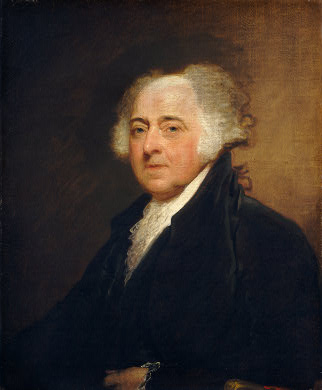 "The next Morning I think it was [i.e., 6 March 1770], sitting in my Office, near the Steps of the Town house Stairs, Mr. [James] Forrest came in, who was then called the Irish Infant. I had some Acquaintance with him. With tears streaming from his Eyes, he said I am come with a very solemn Message from a very unfortunate Man, Captain Preston in Prison. He wishes for Council, and can get none.
I have waited on Mr. [Josiah] Quincy, who says he will engage if you will give him your Assistance: without it positively he will not. Even Mr. [Robert] Auchmuty declines unless you will engage. . . .
I had no hesitation in answering that Council ought to be the very last thing that an accused Person should want [i.e., be without] in a free Country. That the Bar ought in my opinion to be independent and impartial at all Times And in every Circumstance. And that Persons whose Lives were at Stake ought to have the Council they preferred: But he must be sensible this would be as important a Cause as ever was tried in any Court or Country of the World: and that every Lawyer must hold himself responsible not only to his Country, but to the highest and most infallible of all Trybunals for the Part he should Act.
He must therefore expect from me no Art or Address, No Sophistry or Prevarication in such a Cause; nor any thing more than Fact, Evidence and Law would justify. Captain Preston he said requested and desired no more: and that he had such an Opinion, from all he had heard from all Parties of me, that he could cheerfully trust his Life with me, upon those Principles.
And said Forrest, as God almighty is my judge I believe him an innocent Man. I replied that must be ascertained by his Tryal, and if he thinks he cannot have a fair Trial of that Issue without my Assistance, without hesitation he shall have it.
Upon this, Forrest offered me a single Guinea as a retaining fee and I readily accepted it. From first to last I never said a Word about fees, in any of those Cases, and I should have said nothing about them here, if Calumnies and Insinuations had not been propagated that I was tempted by great fees and enormous sums of Money.
Before or after the Trial, Preston sent me ten Guineas and at the Tryal of the Soldiers afterward Eight Guineas more, which were all the fees I ever received or were offered to me, and I should not have said any thing on the subject to my Clients if they had never offered me any Thing.
This was all the pecuniary Reward I ever had for fourteen or fifteen days labor, in the most exhausting and fatiguing Causes I ever tried: for hazarding a Popularity very general and very hardly earned: and for incurring a Clamour and popular Suspicions and prejudices, which are not yet worn out and never will be forgotten as long as History of this Period is read.
For the Experience of all my Life has proved to me, that the Memory of Malice is faithful, and more, it continually adds to its Stock; while that of Kindness and Friendship is not only frail but treacherous. It was immediately bruited abroad that I had engaged for Preston and the Soldiers, and occasioned a great clamour which the Friends of Government delighted to hear, and slyly and secretly fomented with all their Art."
This is an inspiring account of a criminal lawyer speaking up for both the right to have a qualified an impartial attorney. It also demonstrates the power of a jury trial to determine the truth—in spite of both mob mentality and the blind media.